Pool Test Kits

 
Filter

Filters

Subcategory

    Reset

    Pool Test Kits
    Frequently Asked Questions

    • What should I test my pool water for?

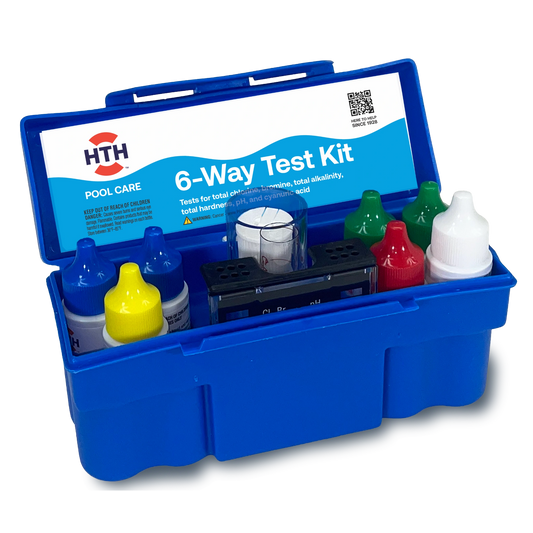
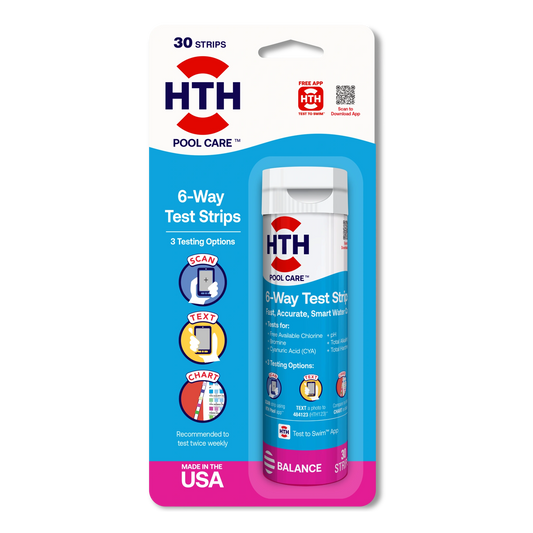
      At minimum, test for free chlorine, pH, total alkalinity, calcium hardness, and cyanuric acid (CYA/stabilizer). These five parameters control water safety, clarity, and the effectiveness of all other pool chemicals you add. HTH 6-Way Test Strips and the HTH 6-Way Test Kit test these five key parameters, plus bromine.

    • How often should I test my pool?

      Test pool water 2–3 times per week during swim season. Test more frequently — even daily — after heavy rain, large gatherings, chemical additions, or extreme heat. Early detection of imbalances saves time, money, and chemical waste.

    • What is the difference between test strips and a liquid test kit?

      HTH 6-Way Test Strips provide fast, convenient results in 30–60 seconds through the HTH Test to Swim™ app and are great for routine checks. The HTH 6-Way Test Kit uses chemical reagents and delivers more precise readings—ideal for troubleshooting persistent water problems or confirming borderline results from a test strip.

    • What are the ideal pool water chemistry levels?

      Target levels are: free chlorine 1–4 ppm, pH 7.2–7.6, total alkalinity 60–120 ppm, calcium hardness 200–500 ppm, and cyanuric acid 20–50 ppm. Keeping all of these in range helps chlorine work effectively and keeps water clear and comfortable.

    • What is the difference between free chlorine, total chlorine, and combined chlorine?

      Free chlorine is the active sanitizer available to clean your pool—keep it at 1–4 ppm. Total chlorine is free chlorine plus combined chlorine (chloramines), which are spent chlorine compounds that no longer sanitize. When total chlorine significantly exceeds free chlorine, you have chloramine buildup and need to shock. The HTH 6-Way Test Kit measures both free and total chlorine so you can monitor the gap.

    • Does HTH have an app to help me test my pool water?

      Yes. The free HTH Test to Swim™ app for iOS and Android allows you to scan HTH test strips with your smartphone camera and instantly receive personalized chemical recommendations and dosage calculations. It connects directly to your pool's volume and current readings, eliminating the guesswork of reading color charts and calculating doses manually.

    • Where in my pool should I collect water for testing?

      Collect water from elbow depth, 12–18 inches below the surface, in a location away from return jets, skimmers, and pool walls. Samples collected near return jets can produce distorted chemistry readings, and samples near walls can be affected by concentrated chemicals that have not fully circulated. A mid-pool, mid-depth sample gives the most representative reading of your overall water chemistry.

    • What time of day should I test my pool water?

      Test in the morning before swimmers enter and before adding any chemicals. Avoid testing immediately after shocking — wait at least 4–6 hours for chemicals to distribute. Morning testing gives you a baseline for the day and allows time to make corrections before the pool sees heavy use.